Chiropractor in Toronto: Care, Costs & Clinic Guide
Chiropractic care in Toronto provides primary-contact diagnosis and spinal adjustment without requiring a doctor's referral.
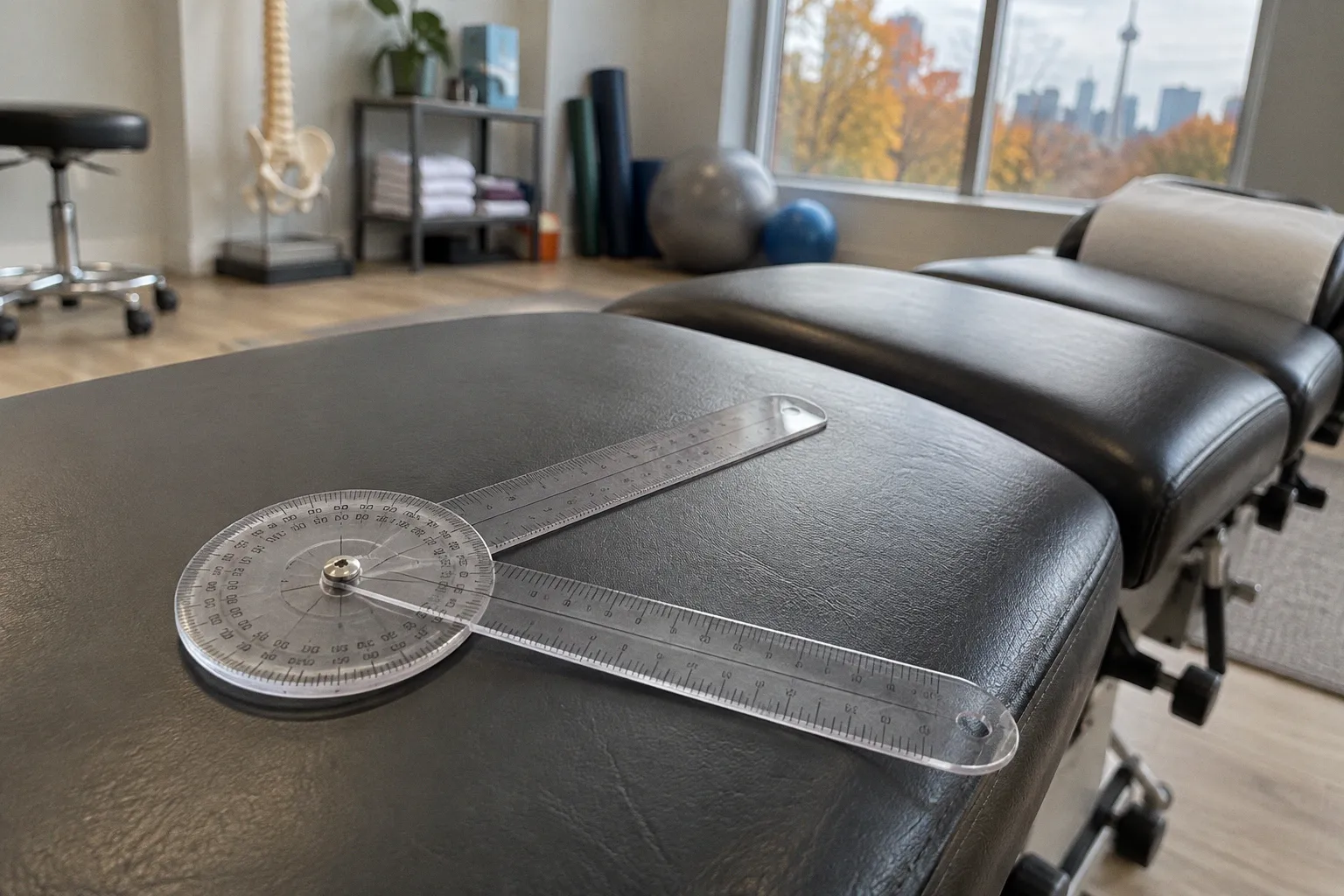
Services are regulated provincially under the Chiropractic Act, 1991, with initial assessments typically ranging from $80 to $175.
| Regulatory Body | College of Chiropractors of Ontario (CCO) |
| Governing Legislation | Chiropractic Act, 1991 |
| OHIP Coverage | Not covered (delisted December 1, 2004) |
| Tax Status | 0% HST (HST-exempt in Ontario) |
| Initial Assessment (35–70 min) | $80–$175 |
| Follow-Up Adjustment (15–30 min) | $50–$100 |
| Custom Orthotics Fitting | $450–$600 |
| Major Transit & Travel Hubs | Toronto Pearson (YYZ), Union Station |
Finding a registered chiropractor in Toronto requires understanding Ontario's distinct regulatory and payment framework. As primary-contact healthcare providers, Toronto chiropractors assess, diagnose, and treat conditions involving the spine, nervous system, and joints without a physician's sign-off. Because provincial OHIP coverage ended in December 2004, treatments are funded via extended private health plans, workplace WSIB claims, motor vehicle accident (MVA) insurance, or direct out-of-pocket payment.
Whether you are arriving via Toronto Pearson International Airport (YYZ), commuting through central Union Station, or seeking pain relief in downtown neighborhoods, access across the Greater Toronto Area remains widespread. This guide covers mandatory provincial regulations, current 2026 session rates, tax-exempt billing practices, and logistical tips for planning clinic visits and regional travel across Ontario.
Essential Regulations, Licensing & Insurance Coverage
Chiropractors in Toronto operate as regulated primary health professionals governed by the College of Chiropractors of Ontario (CCO) under the Chiropractic Act, 1991. You do not need a medical doctor's referral to book an appointment.
- OHIP Status: Routine and emergency chiropractic care was officially delisted from the Ontario Health Insurance Plan (OHIP) on December 1, 2004. Patients must pay privately or use third-party benefits.
- Insurance Options: Most patients utilize Extended Health Care (EHC) benefits, Workplace Safety and Insurance Board (WSIB) claims for occupational injuries, or Motor Vehicle Accident (MVA) insurance funds.
- Clinical Scope: Beyond spinal adjustments and joint mobilization, authorized Ontario chiropractors can perform acupuncture on tissue below the dermis within their scope of practice.
- Sales Tax: All chiropractic treatments provided by a licensed practitioner in Ontario are 100% HST-exempt.
Pricing Overview & Fee Breakdown (2026)
Private clinics across Toronto set their own fees, influenced by the Ontario Chiropractic Association guidelines and practitioner experience. Standard out-of-pocket costs follow predictable ranges across the city:
| Service Type | Duration | Typical Cost |
|---|---|---|
| Initial Consultation & Assessment | 35–70 min | $80–$175 |
| Standard Follow-up Adjustment | 15–30 min | $50–$100 |
| Diagnostic X-Rays (if required) | Per region | $50–$100 |
| Custom Orthotics Consultation & Fitting | Complete set | $450–$600 |
Direct billing to major private insurance providers is commonly available on-site, minimizing immediate out-of-pocket expenses for insured patients.
Access Points & Clinic Hubs Across Toronto
Accessing care in Toronto is straightforward whether staying downtown or moving through regional transit corridors. Practitioners are clustered across major commercial and residential sectors:
- Downtown & Financial District: High concentration of multidisciplinary wellness clinics catering to office workers, directly accessible via the underground PATH network and Union Station rail hub.
- Midtown & North York: Clinics situated along the Yonge-University subway line, offering integrated rehabilitation, acupuncture, and custom orthotics.
- Airport Corridor (YYZ): Facilities around Toronto Pearson International Airport and major transit connections, convenient for travelers picking up car rentals or arriving on regional flights.
Parking in core districts can be limited and costly; utilizing public transit or choosing clinics with dedicated visitor lots outside the core reduces travel stress.
Mobility & Regional Travel Tips from Toronto
For travelers recovering from spinal discomfort or managing back pain during long drives, planning appropriate travel routes from Toronto is essential. Modern vehicle rentals from Toronto Pearson (YYZ) or downtown depot locations provide comfortable bases for exploring southern Ontario.
- Ergonomic Adjustments: Set your vehicle seat angle to maintain lumbar support before setting off along the 400-series highways.
- Rest Breaks: Schedule driving intervals of no longer than 90 minutes to stretch hip flexors and decompress the spine.
- Clinic Coordination: If traveling regionally, verify appointment availability ahead of time, as same-day slots in surrounding tourist destinations can fill quickly on weekends.
Where to go by car
| Destination | Distance | Time | Tolls (est.) | Why go |
|---|---|---|---|---|
| Niagara-on-the-Lake via QEW | ~130 km | ~1 h 30 min | — | Scenic wine country drive with level terrain and frequent rest stops. |
| Barrie & Lake Simcoe via Highway 400 | ~110 km | ~1 h 15 min | — | Direct northern highway route leading to waterfront parks and recreational areas. |
| Prince Edward County via Highway 401 E | ~215 km | ~2 h 15 min | — | Gentle coastal driving route popular for weekend countryside retreats. |
| Blue Mountain & Collingwood via ON-26 | ~160 km | ~2 h 00 min | — | Escarpment route connecting Toronto with Georgian Bay wellness resorts. |
Tolls: rates vary by country and route segment — check current pricing before you go.